I am going to analyse how the Opening Credits of The Third Man establishes the Thriller genre
The opening credits of the film, uses Non-Diagetic Sound in the beginning, when the Zither was playing when the credits was rolling. Then as the opening scene went on, the film uses Diagetic Sound, by using a voice over with the soundtrack playing along, throughout the opening sequence.
The film uses Non-Ambient lighting throughout the whole scene which of course creates shadows which shows that there is another presence within the scene.
The camera angles used in this opening scene are mostly tilt shots and close up shots, the purpose of the use of these shots is to illustrate disorientation and confusion, making the film look weird and different.
The opening sequence also follows traditional conventions of a Thriller film. It uses big open Train stations and also big isolated buildings, in which Harry Lime's apartment was located.
Another generic convention the film uses is enigma. When it was said in the beginning that Harry Lime is dead, there was a bit of enigma to it, as Martins had suspected, like something wasn't right. Another thing that made the language barrier of Holly Martins and the people of Vienna because he couldn't understand what they're saying, makes it much more difficult for him to know what the people are saying to each other.
Showing posts with label G321 Thriller Research. Show all posts
Showing posts with label G321 Thriller Research. Show all posts
Thursday, 15 March 2012

Sunday, 29 January 2012
The Third Man - Sewer Chase
I am going to analyse the mise-en-scene of the sewer chase on The Third Man
Analyse from 3:23 to 11:00
Sound
The scene uses a mixture of Diagetic and Non-Diagetic sounds. The use of the War Sirens (heard from the clip above) shows as if there is a rush to get things done, which in this case would be the Higher authority figure trying to catch Harry Lime. It also uses other sounds such as footsteps and water flowing through, it shows as if Harry Lime is trapped and that no matter what he does, the police would still be able to catch him.
Lighting
The scene uses Non-Ambient lighting throughout this scene. It uses Chiaroscuro lighting, to increase suspense throughout the scene. The use of non-ambient lighting shows fear, especially on harry because it exposes what type of a criminal he is and that this time he's not going to get away for what he has done.
Vanishing Point
Carol Reed has used Vanishing Point in the sewer chase to show what type of person Harry is. He just comes and goes. One police office finds him and then he runs off and disappear.
Claustrophobic Spaces
Carol Reed has used Claustrophobic spaces to portray as if the world is creeping back in to Harry Lime and that his time is up and that wherever he goes, he is not going to get away and that sooner or later he would be seen by the police and that his days in hiding are over.
Generic conventions used
The sewer chase uses generic conventions found in Thriller Films. Harry Lime is seen as this criminal, as the police is chasing him for what he has done, and the scene also uses Underground sewers with wet narrow alleyways, which is a generic location for a Thriller Film, especially for a Film Noir.
Analyse from 3:23 to 11:00
Sound
The scene uses a mixture of Diagetic and Non-Diagetic sounds. The use of the War Sirens (heard from the clip above) shows as if there is a rush to get things done, which in this case would be the Higher authority figure trying to catch Harry Lime. It also uses other sounds such as footsteps and water flowing through, it shows as if Harry Lime is trapped and that no matter what he does, the police would still be able to catch him.
Lighting
The scene uses Non-Ambient lighting throughout this scene. It uses Chiaroscuro lighting, to increase suspense throughout the scene. The use of non-ambient lighting shows fear, especially on harry because it exposes what type of a criminal he is and that this time he's not going to get away for what he has done.
Vanishing Point
Carol Reed has used Vanishing Point in the sewer chase to show what type of person Harry is. He just comes and goes. One police office finds him and then he runs off and disappear.
Claustrophobic Spaces
Carol Reed has used Claustrophobic spaces to portray as if the world is creeping back in to Harry Lime and that his time is up and that wherever he goes, he is not going to get away and that sooner or later he would be seen by the police and that his days in hiding are over.
Generic conventions used
The sewer chase uses generic conventions found in Thriller Films. Harry Lime is seen as this criminal, as the police is chasing him for what he has done, and the scene also uses Underground sewers with wet narrow alleyways, which is a generic location for a Thriller Film, especially for a Film Noir.
Wednesday, 25 January 2012
Intertextuality
I am going to analyse why Quentin Tarantino used the soundtrack from The Good, the Bad and the Ugly and other Intertextual References from other Films in Kill Bill Vol. 2
The finale of The Good, the Bad, the Ugly
Intertextual references can help give meaning to key scenes in a film, which is why Quentin Tarantino has used the soundtrack from The Good, the Bad, and the Ugly.
Quentin Tarantino used the Intertextual reference when The Bride had a fight off with Bud (Bill's Brother) and then Bud ended up burying her down and The Bride managing to get out of the coffin.
Quentin Tarantino first used the Intertextual Reference when The Bride had her fight with Bud
In this first scene Quentin Tarantino has made two Intertextual References from The Good, the Bad and the Ugly.
His first Intertextual Reference was Bud. His character shows similarity with the character Tuco (The Ugly).
Bud's appearance gives us this impression that he is the opposite his older brother. He is seen as this scruffy and a really messy person while his brother is shown as powerful and has a good control over his life because Bud lives in his trailer.


Another reference that Tarantino makes is the sound used in both clips. Which could be heard throughout this first clip and the second clip.
Tarantino makes another Intertextual Reference. This is when The Bride has been buried and she then makes her way out of the coffin.
Quentin Tarantino has used a variety of Intertextual References. This includes the Music, Characters, Locations and Costumes.
 The first Intertextual reference Quentin Tarantino has used didn't actually come from The Good, the Bad and the Ugly but it's mostly used in Thriller films such as The Third Man. Quentin Tarantino has used generic conventions of a Thriller Film throughout his movies. In this particular one he had used Claustrophobic locations and then in turn took them to the extreme.
 Quentin Tarantion, then again makes another reference with the costume. The Bride is seen wearing Cowboy/Cowgirl Boots. This reference show that she is conforming with the characteristics and looks of a Cowgirl. Which brings me to another Intertextual reference that Tarantino made, that The Bride is like Blondie, No matter what the problem is she is able to pick herself up and get herself sorted.
Another reference Tarantino uses is location. The scene is set in a Cemetery, where it is Isolated and away from any prying eyes. The use of the cemetery increases suspense because no one sees what's happening.


The finale of The Good, the Bad, the Ugly
Intertextual references can help give meaning to key scenes in a film, which is why Quentin Tarantino has used the soundtrack from The Good, the Bad, and the Ugly.
Quentin Tarantino used the Intertextual reference when The Bride had a fight off with Bud (Bill's Brother) and then Bud ended up burying her down and The Bride managing to get out of the coffin.
Quentin Tarantino first used the Intertextual Reference when The Bride had her fight with Bud
In this first scene Quentin Tarantino has made two Intertextual References from The Good, the Bad and the Ugly.
His first Intertextual Reference was Bud. His character shows similarity with the character Tuco (The Ugly).
Bud's appearance gives us this impression that he is the opposite his older brother. He is seen as this scruffy and a really messy person while his brother is shown as powerful and has a good control over his life because Bud lives in his trailer.

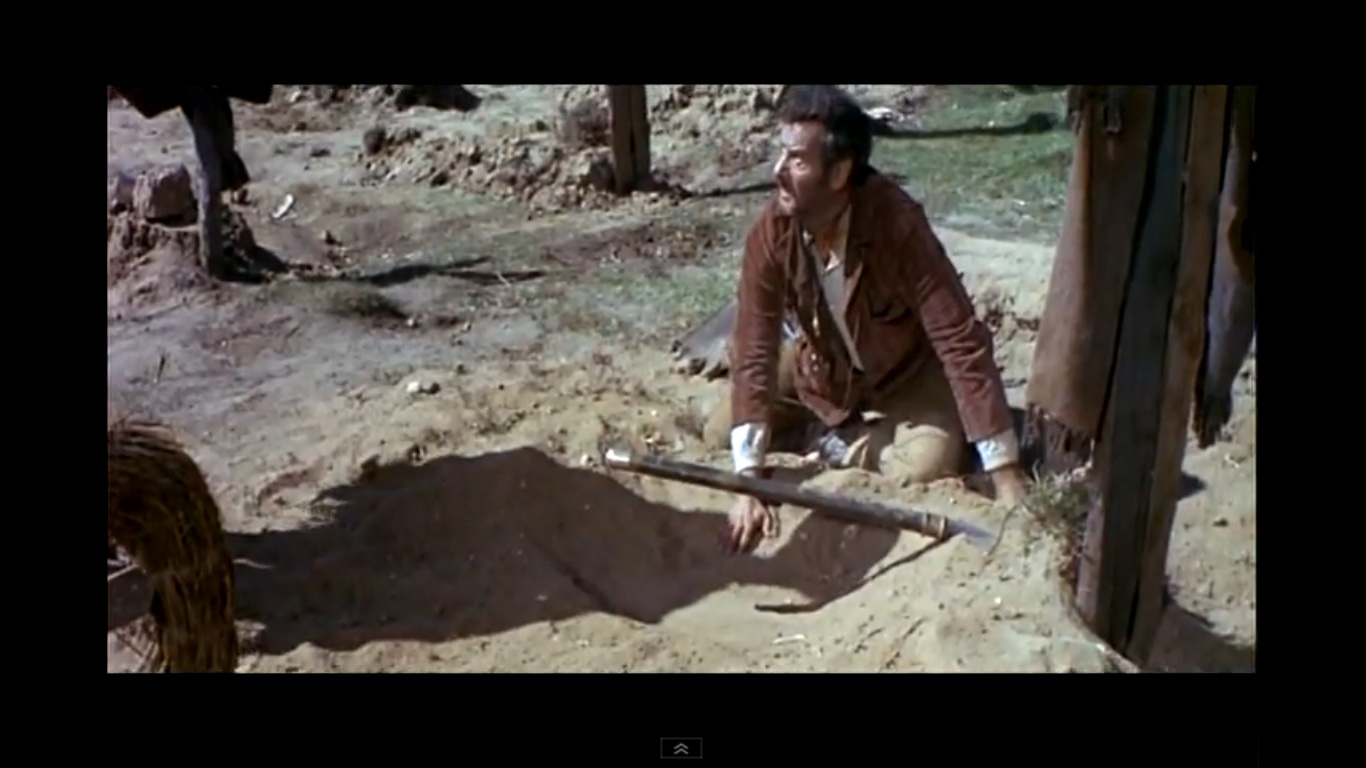
Another reference that Tarantino makes is the sound used in both clips. Which could be heard throughout this first clip and the second clip.
Tarantino makes another Intertextual Reference. This is when The Bride has been buried and she then makes her way out of the coffin.
Quentin Tarantino has used a variety of Intertextual References. This includes the Music, Characters, Locations and Costumes.
 The first Intertextual reference Quentin Tarantino has used didn't actually come from The Good, the Bad and the Ugly but it's mostly used in Thriller films such as The Third Man. Quentin Tarantino has used generic conventions of a Thriller Film throughout his movies. In this particular one he had used Claustrophobic locations and then in turn took them to the extreme.
Another reference Tarantino uses is location. The scene is set in a Cemetery, where it is Isolated and away from any prying eyes. The use of the cemetery increases suspense because no one sees what's happening.


Monday, 16 January 2012
Image Analysis: Screenshot from "Thelma and Louise" Ridley Scott (1991) - Improved

This is a revised Analysis of Thelma and Louise I have done a month ago. I have took Ms. Barton's advise and represented my work driagramatically.
To improve Controlled Assessment - Psycho (1960)

Screenshot of user rating for Psycho
It has been shown in IMDb that Psycho appealed to a Young Under 18 Male Demographic.

A user review from IMDb
This User Review reflects on what has happened to cinema for the past 50 years and how Alfred Hitchcock's artistique sense have inspired directors such as myself to aspire to be a director and thanks to Mr. Hitchcock then some of the greatest directors wouldn't be directing such amazing films.
Wednesday, 14 December 2011


Analysis of the 'Clubbed to Death Scene' of Heavenly Creatures
Director: Peter Jackson
Writers: Fran Walsh, Peter Jackson
Cast
Camera Angles and Movement

The scene first starts off with a Two Shot of of Pauline and Juliet sitting in the bus. The use of the two shot shows the difference of personality and characteristics between the two of them. Pauline looks like she is really eager and would want to go on and kill her mother while Juliet is seen having second thoughts about what she is about to do, with her seen as anxious and really scared.

The scene then cuts to a Long shot of all of the characters walking through the park. The use of the Long shot establishes location, which in this case would be a big open wide space of park, Juliet's facial expressions shows that she is anxious and should be careful with about they are going to do.


The scene then cuts to a Medium-close up of Pauline and Juliet. The use of the Medium close-up brings focus to the characters which in this case both Juliet and Pauline. They are both seen as being nervous and anxious about their plan because it is taking so long because Pauline's mother decided to go and have some dessert and the time is ticking for them, whether or not they should kill Pauline's mother.

The scene then cuts to a Long shot of the scenery. The use of the Long shot establishes location, which in this case would be a very big park with them being isolated and away from prying eyes and no one seeing what it is that Juliet and Pauline would do.


Writers: Fran Walsh, Peter Jackson
Cast
Melanie Lynskey - Pauline Parker
Kate Winslet - Juliet Hulme
Sarah Peirse - Honora Parker
Diana Kent - Hilda Hulme
Clive Merrison - Dr. Henry Hulme
Kate Winslet - Juliet Hulme
Sarah Peirse - Honora Parker
Diana Kent - Hilda Hulme
Clive Merrison - Dr. Henry Hulme
Simon O'Connor - Herbert Rieper
I am going to analyse the mise-en-scene of the 'Clubbed to death scene of Heavenly Creatures
Camera Angles and Movement

The scene first starts off with a Two Shot of of Pauline and Juliet sitting in the bus. The use of the two shot shows the difference of personality and characteristics between the two of them. Pauline looks like she is really eager and would want to go on and kill her mother while Juliet is seen having second thoughts about what she is about to do, with her seen as anxious and really scared.

The scene then cuts to a Long shot of all of the characters walking through the park. The use of the Long shot establishes location, which in this case would be a big open wide space of park, Juliet's facial expressions shows that she is anxious and should be careful with about they are going to do.

The scene then cuts to a close-up shot of the clock in the bakery. The use of the clock is a Thriller convention because of the chronological order of when things happen. Where and when were they at a specific time.

The scene then cuts to a Medium-close up of Pauline and Juliet. The use of the Medium close-up brings focus to the characters which in this case both Juliet and Pauline. They are both seen as being nervous and anxious about their plan because it is taking so long because Pauline's mother decided to go and have some dessert and the time is ticking for them, whether or not they should kill Pauline's mother.

The scene then cuts to a Long shot of the scenery. The use of the Long shot establishes location, which in this case would be a very big park with them being isolated and away from prying eyes and no one seeing what it is that Juliet and Pauline would do.


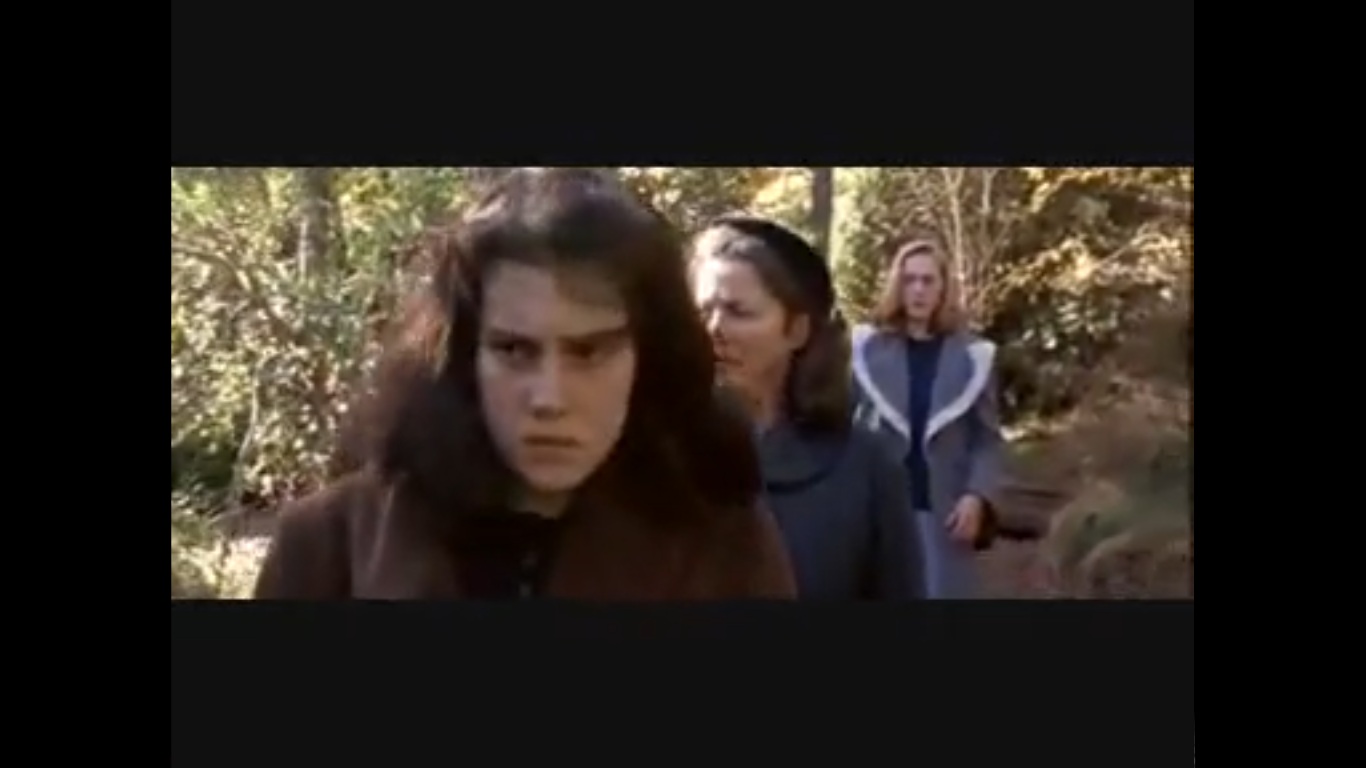
Peter Jackson then repeatedly uses Close-up shots of the characters body parts, the bag of Pauline and the faces of all three characters. The use of the close-up shot was to identify with the character's emotions which shows that Juliet is scared and anxious while Pauline shows confusion and that she looks like she doesnt know what she is doing.

The scene then cuts to a Low Angle shot of Pauline standing with a brick and her Mother trying to pick up a Jewel that she saw on the ground. The use of the Low Angle shot shows Power/Status and that Honora who is the Parental figure for Pauline isn't powerful anymore and that she is much more vulnerable.

The scene then cuts to a Close-Up shot of Pauline crying after she had just hit her own Mother with a brick. The use of the Close-up shot was to allow the audience to see Pauline's emotions, which is that she is gonna regret what she is doing but she still continues on and do it.

The scene quickly to a High Angle shot of Honora on the floor in agony. The purpose of a High Angle shot is to show vulnerability of a character, which in this case shows Honora being weak and vulnerable. It also shows her begging for mercy for Pauline and Juliet to stop (which they won't).

The scene then cuts to a close-up shot of Pauline crying in the docks. The purpose of the close-up shot was to show what Pauline was feeling, which is that she didn't get the chance to get away with the only friend that she could've had, not only did she not get away, she has also lost her family. She killed her own Mother and her father doesn't wanna see her again after what she's done.
Lighting
In this scene, Peter Jackson uses Natural Ambient throughout this scene, the use of Natural Ambient light increases suspense in the scene.
Sound
In this scene Peter Jackson uses a variety of Diagetic and Non-Diagetic sound which includes the dialogue between the three characters (Pauline, Juliet and Honora) and the use of soundtrack from Madame Butterfly which is the Humming Chorus. (Feel free to listen below)
Costume
The characters are seen wearing big and long coats which were very popular in the early 50's. The use of the big coats buttoned up shows as if they're hiding their shame, what about they are going to do to Pauline's mother, trying to cover up their tracks.
Jackie Brown (1997) Part 3 - Don't Go Shopping with DeNiro
The final clip that I am going to asses is when Robert DeNiro's character is in a shopping mall.


The scene begins with a Two Shot of Melanie and Louis walking through the department store. The use of the Two Shot shows the difference between Melanie and Louis and it also puts into perspective the traditional representations of men and women, which is that Men are always dominant and strong and Women are undermined and weak. The shot uses diagetic sound of Louis and Melanie talking, the purpose of the use of diagetic sound is to allow the audience to hear what is going on between the both of them.
The Two Shot is mostly used throughout this scene, after they got the money the shot was then used again to show Louis's dominance.

The final shot is a two shot of Melanie and Louis getting into the car. This shot challenges Thriller Conventions as it takes place in broad daylight using natural ambient lighting and it is also set in a car park where a lot of people could see what is hapenning, it challenges the conventions because murders in Thriller Films such as Essex Boys are usually done in isolated places, while in Jackie Brown, it is done in a populated area. This shot also shows what type of character Louis is. A really powerful person, who isn't afraid of getting his hands dirty, which is why he murdered Melanie in a parking lot, where there could be a chance he could be seen doing his dirty act.
The Two Shot is mostly used throughout this scene, after they got the money the shot was then used again to show Louis's dominance.

The final shot is a two shot of Melanie and Louis getting into the car. This shot challenges Thriller Conventions as it takes place in broad daylight using natural ambient lighting and it is also set in a car park where a lot of people could see what is hapenning, it challenges the conventions because murders in Thriller Films such as Essex Boys are usually done in isolated places, while in Jackie Brown, it is done in a populated area. This shot also shows what type of character Louis is. A really powerful person, who isn't afraid of getting his hands dirty, which is why he murdered Melanie in a parking lot, where there could be a chance he could be seen doing his dirty act.
Jackie Brown (1997) Part 2 - The shooting of Beaumont Livingstone by Ordell Robbie
Another clip that I am going to analyse is the shooting of Beaumont Livingstone:


Some of the Low Angle Shots from other Quentin Tarantino films.


The first shot uses a Close Up of Ordell talking to Beaumont. The use of the close up shot allows the audience to identify with the character's emotions, which is he's angry at him because he had to get Beaumont out of prison. The lighting also shows what type of character Ordell is this dark and sinister person.

The second shot used a Two Shot of Beaumont and Ordell talking. The use of the Two shot shows the difference between the two characters. Ordell is seen as powerful and much more successful than Beaumont; and as for him he is seen as this scum, who hasn't got his act together. This shot uses non-ambient lighting, which shows everything for what Beaumont is, a troubled person.

The scene then uses a Low Angle shot of Ordell and Beaumont looking into the boot of Ordell's Car. The use of the Low Angle Shot shows the power and status of both of the characters. This shot has been used by Quentin Tarantino in his previous films such as Inglorious Basterds and Resevoir Dogs

Some of the Low Angle Shots from other Quentin Tarantino films.

The scene then cuts to a High Angle Shot of Beaumont on the trunk of the car. The use of the High Angle shot shows vulnerability which is from this shot, shows that Beaumont is the vulnerable one because he was easily persuaded by Ordell to get to the trunk.


The scene then cuts to another Close Up Shot of Beaumont in the car putting on some gloves, the purpose of the close up shot is to show Ordell's emotions, which is how he makes sure he doesn't get noticed killing Beaumont and not leave anything that traces back to him.


The scene then uses a Vanishing Point, to make it look like the car disappear from the distance, this shows that Beaumont is going somewhere dangerous and that he is not coming back.

The scene then ends with a Long Shot of the car entering a vacant land and then Ordell shoots Beaumont. The use of the Long Shot establishes the location of the shot, which shows that its isolated and empty and no one has seen what has happend to Beaumont.
Jackie Brown (1997) Part 1 - Title Sequence
Jackie Brown
Director: Quentin Tarantino
Writer: Quentin Tarantino, Elmore Leonard
Cast:
Pam Grier - Jackie Brown
Samuel L. Jackson - Ordell Robbie
Robert Foster - Max Cherry
Bridget Fonda - Melanie Ralston
Michael Keaton - Ray Nicolette
Robert DeNiro - Louis Gara
I am going to analyse three clips from the film Jackie Brown one these clips is the Opening Sequence.
The opening sequence introduces to the audience Pam Grier's character Jackie Brown. Quentin Tarantino establishes Pam Grier's character by using a lot close up shots.
Camera Angle Shots and Movements
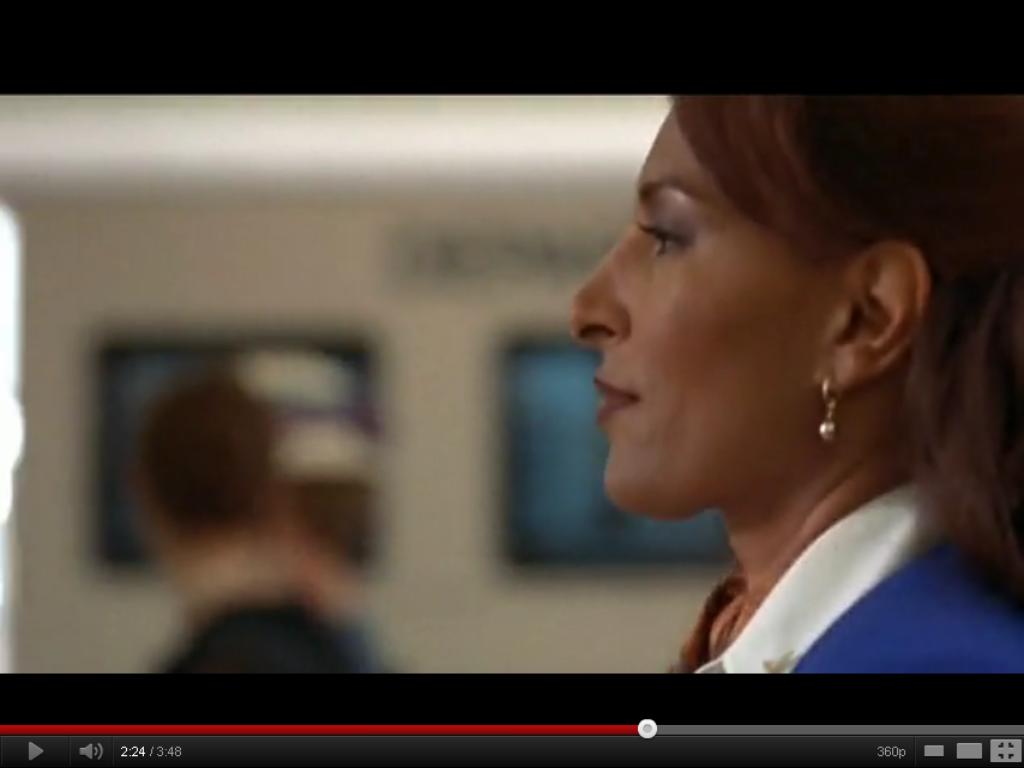
 The scene first starts off by using a Medium Close up shot of Jackie as she walks through the airport terminal. The use of the medium close up shot brings focus to the character and no one else that is on the shot.
 The scene then cuts to a Long shot. The use of the long shot establishes the location fo the scene (which is the Airport). This shot shows how stewardesses recieve special treatment and how they didn't even have to go through customs and security.
 The scene then cuts to a Low Angle shot which shows power, that Jackie has a much higher status than everyone else around her. Her clothing also illustrates this. Everyone is wearing ordinary clothing and she wears her uniform which makes her different from everyone else in the crowd.
 The scene then cuts to a close up shot as Jackie is walking through the terminal. The use of Close Up shots enables the audience to see Jackie's emotions. Which shows that she is happy.
 The scene then cuts to a Over the Shoulder shot of Jackie as she walks to the terminal gate. The use of the Over The Shoulder shot shows as if there is another presence following her. Also, the sue of the shoulder shot puts the audience into Jackie Brown's shoes. She's late she didn't want to miss her flight so she runs.
Sound
Throughout this whole scene. Quentin Tarantino only used non-diagetic sound. Which comprimised the use of music.
Lighting
Throughout the scene Quentin Tarantino mostly used natural ambient lighting where possible. An example of this is when Jackie was walking through the terminal, where windows can be seen because light could be possibly reflected. Quentin Tarantino used non-ambient lighting in the indoor scenes where there is not that much lighting.
Costumes
 In this scene Jackie Brown wears her stewardess uniform. The use of her stewardess uniform shows her as this powerful and sophisticated person because she is different to the other people such as the passengers because it shows that she has power over them.
Intertextual References
There is a TV series which started in September 2011 called Pan Am which revolved around the Pilots and Stewardesses of Pan American World Airways .

One of the characters of the show named Kate Cameron played by Keli Garner works for the CIA which involves her smuggling documents or swapping them with anyone who flies Pan American. A Character which is nearly similar to Jackie Brown.

Another Intertextual that I have found is that the music used (Across the 110th Street) describes the women in Blaxploitation films such as Coffy and Foxy Brown. The lyrics said "Pimps trying to catch a woman that's weak" or "Woman trying to catch a trick on the street." these lyrics descirbes the characteristics of Foxy Brown or Coffy on the films that Pam Grier was in.
Director: Quentin Tarantino
Writer: Quentin Tarantino, Elmore Leonard
Cast:
Pam Grier - Jackie Brown
Samuel L. Jackson - Ordell Robbie
Robert Foster - Max Cherry
Bridget Fonda - Melanie Ralston
Michael Keaton - Ray Nicolette
Robert DeNiro - Louis Gara
I am going to analyse three clips from the film Jackie Brown one these clips is the Opening Sequence.
The opening sequence introduces to the audience Pam Grier's character Jackie Brown. Quentin Tarantino establishes Pam Grier's character by using a lot close up shots.
Camera Angle Shots and Movements
 The scene first starts off by using a Medium Close up shot of Jackie as she walks through the airport terminal. The use of the medium close up shot brings focus to the character and no one else that is on the shot.


Sound
Throughout this whole scene. Quentin Tarantino only used non-diagetic sound. Which comprimised the use of music.
Lighting
Throughout the scene Quentin Tarantino mostly used natural ambient lighting where possible. An example of this is when Jackie was walking through the terminal, where windows can be seen because light could be possibly reflected. Quentin Tarantino used non-ambient lighting in the indoor scenes where there is not that much lighting.
Costumes

Intertextual References
There is a TV series which started in September 2011 called Pan Am which revolved around the Pilots and Stewardesses of Pan American World Airways .

One of the characters of the show named Kate Cameron played by Keli Garner works for the CIA which involves her smuggling documents or swapping them with anyone who flies Pan American. A Character which is nearly similar to Jackie Brown.

Another Intertextual that I have found is that the music used (Across the 110th Street) describes the women in Blaxploitation films such as Coffy and Foxy Brown. The lyrics said "Pimps trying to catch a woman that's weak" or "Woman trying to catch a trick on the street." these lyrics descirbes the characteristics of Foxy Brown or Coffy on the films that Pam Grier was in.
Tuesday, 13 December 2011
The Third Man (1949) - Harry Lime Introduction
The Third Man (1949)
Director: Carol Reed
Writer: Graham Greene
Cast:
Joseph Cotten - Holly Martins
Alida Valli - Anna Schmidt
Orson Welles - Harry Lime
Trevor Howard - Major Colloway
In this post I am going to analyse the Mise-en-scene of The Third Man where Orson Welles's Character Harry Lime is first introduced
Here is the Clip:
Camera Angles and Movement
 The scene first starts off with a Long Shot of Holly Martins walking through the streets of post-war Vienna. The use of the Long shot established his location to the audience.
 The scene then cuts to a Tilt Shot of a mysterious person with their shoes shown standing right next to a cat. The purpose of the tilt shot in this scene is to show confusion and disorientation.
 The scene then cuts to a Medium Close Up shot of the mysterious characters shoes. The purpose of the shot is to bring focus to the character. This shot also shows enigma because you couldn't see the face of the person til later on.

The scene then cuts to a close up shot of Harry Lime appearing in front of the shadow. The use of the close up shot enables the audience to see Harry Lime's emotions.
 The scene then cuts to another Tilt shot of Holly Martins trying to get to Harry Lime. The use of Tilt shot illustrates confusion because at the beginning of the film it has been said that Harry Lime was dead but it turns out that he wasn't.
 The scene then cuts to another Tilt shot of Holly Martins trying to get to Harry Lime but couldn't. This shot suggests that it is a thriller film because of its conventions being shown. One of these is Bright Non-Ambient lighting. The use of we streets and the shadow of Harry Lime which suggests that there is another presence within the area.
 The scene then cuts to a Long Shot of Holly Martins surrounded by buildings in a big open space. This shot establishes location but it also shows how vulnerable he is and how weak he is in such a big open space because he wasn't able to get to Harry Lime.
Lighting
Throughout this scene Carol Reed mostly uses Artificial Non-Ambient lighting to show fear within the setting of the scene,
Locations
This scene shows Generic conventions of a Thriller Location. The scene took place in a big empty space at night which shows isolation and that no one is there. With the use of Artificial lighting the floor is seen as wet shiny streets which increases suspense.
Sound
Throughout this scene, the film mostly uses Non-Diagetic sound, which is the same track that has been heard since the beginning of the film.
Costume
In this scene the characters where seen wearing Suits and Hats which is what people would wear in the 50's where they did not have the type of clothing that we would have in this time.

Director: Carol Reed
Writer: Graham Greene
Cast:
Joseph Cotten - Holly Martins
Alida Valli - Anna Schmidt
Orson Welles - Harry Lime
Trevor Howard - Major Colloway
In this post I am going to analyse the Mise-en-scene of The Third Man where Orson Welles's Character Harry Lime is first introduced
Here is the Clip:
Camera Angles and Movement


The scene then cuts to a close up shot of Harry Lime appearing in front of the shadow. The use of the close up shot enables the audience to see Harry Lime's emotions.


Lighting
Throughout this scene Carol Reed mostly uses Artificial Non-Ambient lighting to show fear within the setting of the scene,
Locations
This scene shows Generic conventions of a Thriller Location. The scene took place in a big empty space at night which shows isolation and that no one is there. With the use of Artificial lighting the floor is seen as wet shiny streets which increases suspense.
Sound
Throughout this scene, the film mostly uses Non-Diagetic sound, which is the same track that has been heard since the beginning of the film.
Costume
In this scene the characters where seen wearing Suits and Hats which is what people would wear in the 50's where they did not have the type of clothing that we would have in this time.

Harry Lime wears the same outfit throughout his appearance on the film.
Subscribe to:
Posts (Atom)